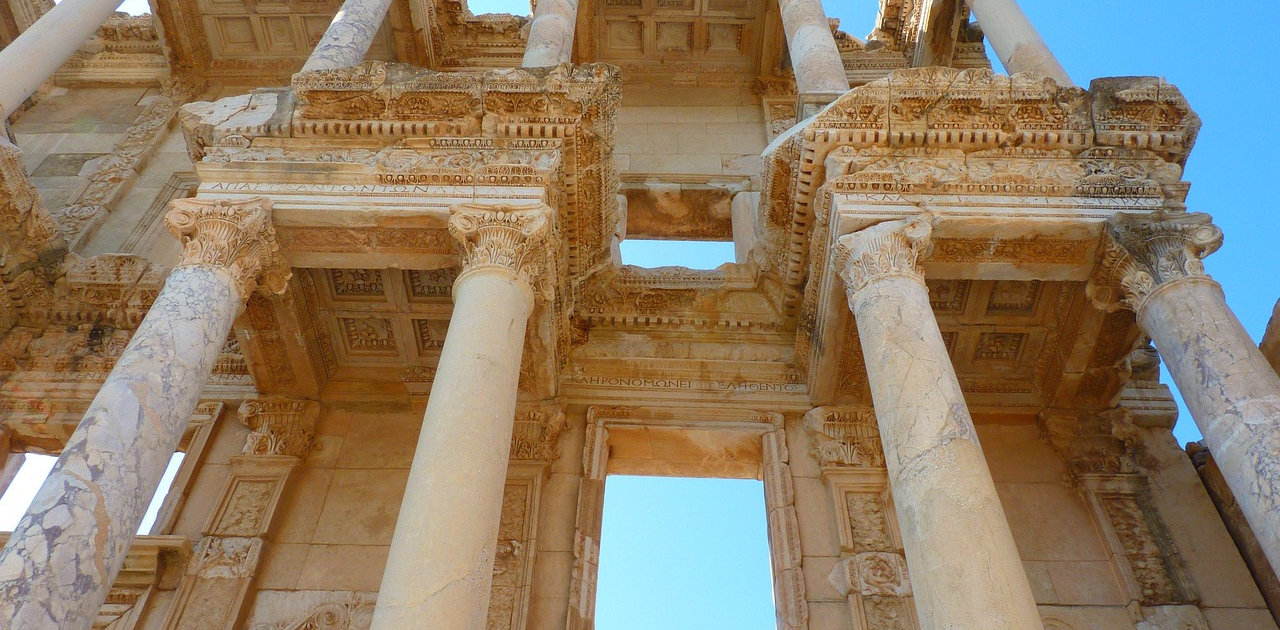
The Library of Celsus at Ephesus, built in the early 2nd century CE — the world of texts, philosophy, and inherited knowledge that Plotinus was born into a century later.

The Library of Celsus at Ephesus, built in the early 2nd century CE — the world of texts, philosophy, and inherited knowledge that Plotinus was born into a century later.
In the third century, a philosopher named Plotinus wrote something that has not been improved upon in seventeen hundred years.
He was writing about beauty — about what happens when we encounter it, and what it reveals about who we are. His answer was not what most people expect from ancient philosophy. It was not about symmetry, proportion, or the pleasure of the senses. It was about recognition.
When the soul encounters beauty, Plotinus wrote, something specific and immediate happens: “the soul names it as from an ancient knowledge and, recognising, welcomes it, enters into unison with it.”
Read that again slowly. “Names it as from an ancient knowledge. Recognises it. Enters into unison with it.”
He is not describing aesthetic pleasure. He is describing a return.
Plotinus was a Neoplatonist — was a Neoplatonist — a philosopher working in the tradition of Plato, teaching in Rome in the third century CE. His collected works, the Enneads, were gathered and edited by his student Porphyry after his death. They represent one of the most sustained and demanding enquiries into the nature of reality, consciousness, and the soul that Western philosophy has produced.
He was also, by all accounts, radiant. His student Porphyry recorded that when Plotinus spoke, his intellect was evident even in the way he lit up his face. He was described as beautiful — not just in appearance, but in the quality of presence he carried.
This is not incidental. For Plotinus, the inner and the outer were not separate domains. Beauty was not a quality applied to surfaces. It was a condition of the soul — and it showed.
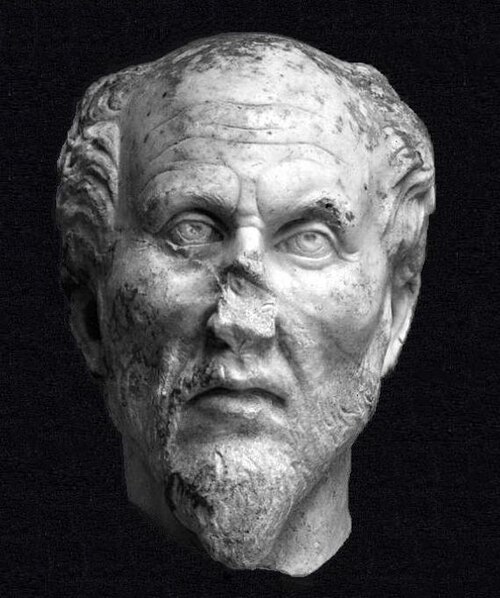
A marble head traditionally identified as Plotinus, Ostia, 4th century CE. Porphyry recorded that Plotinus refused to sit for a portrait in life — no verified likeness of him exists.
The central argument of Plotinus on beauty — developed primarily in Ennead I.6, “On Beauty” — is deceptively simple and, once understood, permanently changes how you think about aesthetic experience.
Beauty, he argues, is not in the object. It is in the relationship between the object and the soul that encounters it. When we experience something as beautiful, what is actually happening is that the soul recognises — in the form before it — something it already knows. A trace of the intelligible world. An echo of a higher order.
This is why beauty produces not merely pleasure but a specific quality of response that is hard to name: a kind of trembling. An arrest. Something between joy and longing. Plotinus describes it directly: “This is the spirit that Beauty must ever induce — wonderment and a delicious trouble, longing and love and a trembling that is all delight.”
This response is not random. It is recognition. The soul is responding to something it already knows, meeting it again in material form.
What makes Plotinus radical rather than merely poetic is that he takes this recognition seriously — as a philosophical and practical path, not a metaphor.
He describes beauty as existing in a hierarchy. Sensible beauty — the beauty we perceive in physical form, in art, in the proportions of a body or a building — is real and valuable. But it is a trace, a reflection of a higher beauty. The soul that genuinely encounters sensible beauty is not meant to stop there. It is meant to follow the recognition upward.
This is where Plotinus draws on an older idea from Plato, known as anamnesis: that before the soul entered the body, it beheld — directly, without obstruction — the true order of reality. It moved among the Forms. It saw beauty itself, not beauty’s reflection. Birth is a kind of forgetting. But the memory is not erased; it is buried. And of everything encountered in the physical world, beauty is what the soul retains enough sensitivity to recognize as a trace of what it once beheld directly. This is why beauty moves us the way ordinary pleasant things do not: it is not offering something new, but recalling something exalted — an experience the soul actually had, in a state it actually occupied, before it took this present form.
This is what makes the ascent possible. The soul climbs not because it is reasoning its way toward an abstraction, but because beauty keeps recalling it to a state of consciousness it once knew directly — and something in it wants to return there.
He describes this ascent in stages. First the beauty of forms. Then the beauty of souls — of character, of virtue, of genuine moral depth. Then the beauty of the Intellect — the ordering principle underlying reality. And finally, for those who can reach it, the beauty of the One: the source from which all beauty flows and to which all beauty points.
Each stage of the ascent depends on the soul becoming, itself, more beautiful — clearing away what obscures its own nature, becoming more aligned with what it seeks.
As he writes: “Withdraw into yourself and look. And if you do not find yourself beautiful yet, act as does the creator of a statue that is to be made beautiful: he cuts away here, he smoothes there, he makes this line lighter, this other purer, until a lovely face has grown upon his work. So do you also; cut away all that is excessive, straighten all that is crooked, bring light to all that is overcast, labour to make all one glow of beauty, and never cease chiseling your statue.”
Plotinus was not anti-art. He was precisely the opposite — but he had demanding standards for what art could do.
He believed that the best art did not merely imitate the visible world. It reached through the visible world toward the intelligible order behind it. The artist who painted from genuine inner vision — from genuine contact with that higher order — produced work that carried the trace of that order into the material realm. The work was therefore capable of producing, in the soul that encountered it, the same recognition that the artist had originally experienced in creating it.
This is a remarkably precise description of what distinguishes art that holds presence from art that merely decorates. The difference between a painting that stops you and one that you walk past is not principally a matter of technical skill. It is a matter of whether the work carries something — whether the hand that made it was in genuine contact with something real, and whether that reality is present in what was made.
For Plotinus, this capacity was not mystical in a vague sense. It was specific and describable. The inner form in the mind of the artist — if the artist is genuinely attending to the right things — is more beautiful than the work itself. And the work, when it is successful, communicates some approximation of that inner form to the viewer.
This is why, he argues, the more lifelike statue is more beautiful than the technically better-proportioned one. Life — presence, soul — is more beautiful than mere form. And it is perceivable.
Seventeen centuries after Plotinus, researchers in neuroaesthetics have begun measuring something that happens in the brain when a person encounters a work of art that genuinely moves them.
What they find is suggestive. When an artwork is experienced as deeply resonant, it activates the brain’s default mode network — the system associated with self-reflection, meaning-making, and inner attentiveness. It’s the same network active during meditation and deep introspection. Art that moves us appears to draw attention inward, toward the same neural territory that turns awareness back toward its own source.
It’s worth being precise about what this evidence can and can’t tell us. An fMRI measures blood oxygenation. It was built to detect that, and it does it well. What it registers is a physical trace — a downstream signature of something that, in Plotinus’s account, is happening at the level of the soul, not the tissue. The instrument is calibrated for one layer of the event. That doesn’t mean the deeper layer isn’t real; it means we’re looking at its shadow on the wall the instrument happens to be pointed at.
Plotinus, of course, offers no scanner. What he offers instead is something instruments can’t produce: a description from the inside, refined over a lifetime of direct attention to the experience itself. Where neuroscience shows us correlation, Plotinus is attempting to name the thing being correlated.
Held together, rather than collapsed into one another, the two accounts become more interesting than either alone. The brain data tells us something real is happening — measurably, reliably, in bodies. Plotinus tells us what it is: not new information arriving, but an exalted experience being recollected — the soul briefly recognizing, in the presence of beauty, something of the state it beheld before it entered this life, and rising, however briefly, back toward the part of itself that was there.
Plotinus was not alone in this. On the far side of the world, in roughly the same centuries, thinkers working in the Natyashastra tradition were describing something strikingly similar — art as a vehicle for transmitting a purified quality of consciousness from maker to viewer. Different languages, different eras of the ancient world, converging on the same intuition science is only now beginning to trace the outline of. (That convergence deserves its own article — one for later in this series.)
If Plotinus is right — and the neuroaesthetics research suggests he may be, at least in structural terms — then the art we choose to live with is not a decorative decision. It is a philosophical one.
Art that carries genuine presence — that was made from real contact with something beyond the merely decorative — offers something to the soul that encounters it, day after day. Not immediately, and not always consciously. But over time, a painting that holds something real becomes part of the inner landscape of a home, much as it did in the Peace Rose installation. It becomes an anchoring point of recognition — a place where the quality of attention that Plotinus describes as the soul entering into unison with beauty becomes available, in small doses, in the ordinary rhythm of daily life.
This is not grandeur. It is something quieter and more consistent. A painting that you notice, in passing, on a Tuesday morning, and that briefly shifts the quality of your attention. That produces, for a moment, the particular quality that Plotinus called “a trembling that is all delight.”
That moment is not nothing. Accumulated over years, it is, perhaps, the very thing that art in a home is for.
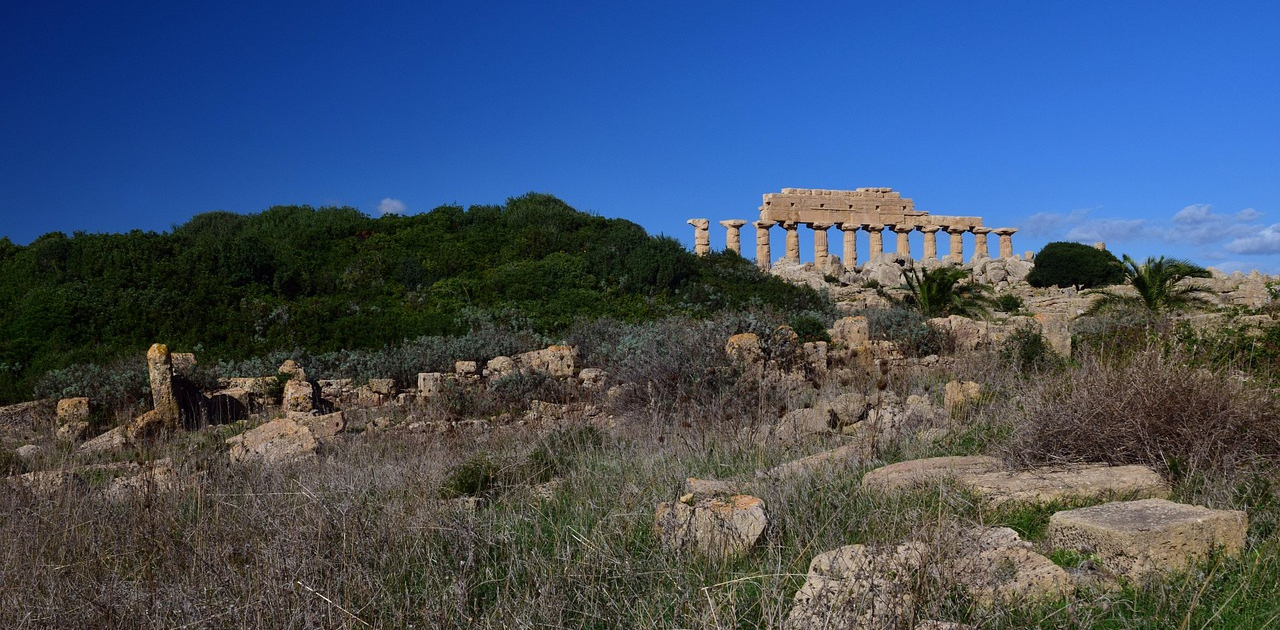
The temple ruins at Selinunte, Sicily — beauty outlasting the hand that made it, and the world that first gave it meaning.
Plotinus’s last recorded words were reported by Porphyry: “Strive to bring back the god in yourselves to the God in the All.”
This is not a command to leave the world. It is a command to attend, within it, to what is most real.
Beauty, for Plotinus, is one of the primary means by which that attending becomes possible. It is not separate from truth or goodness — it is their visible form. When beauty moves us, we are not being distracted from what matters. We are being pointed toward it.
The science is beginning to trace the outline of this, in its own language. The philosophers knew it in theirs. And artists — those working from genuine inner contact rather than mere technique — have always understood it in the only language that finally matters: the work itself.
Yohanna Jessup creates paintings whose visual language emerges from direct inner experience — from meditation, inner attention, and a sustained engagement with beauty as a living reality rather than an aesthetic preference.
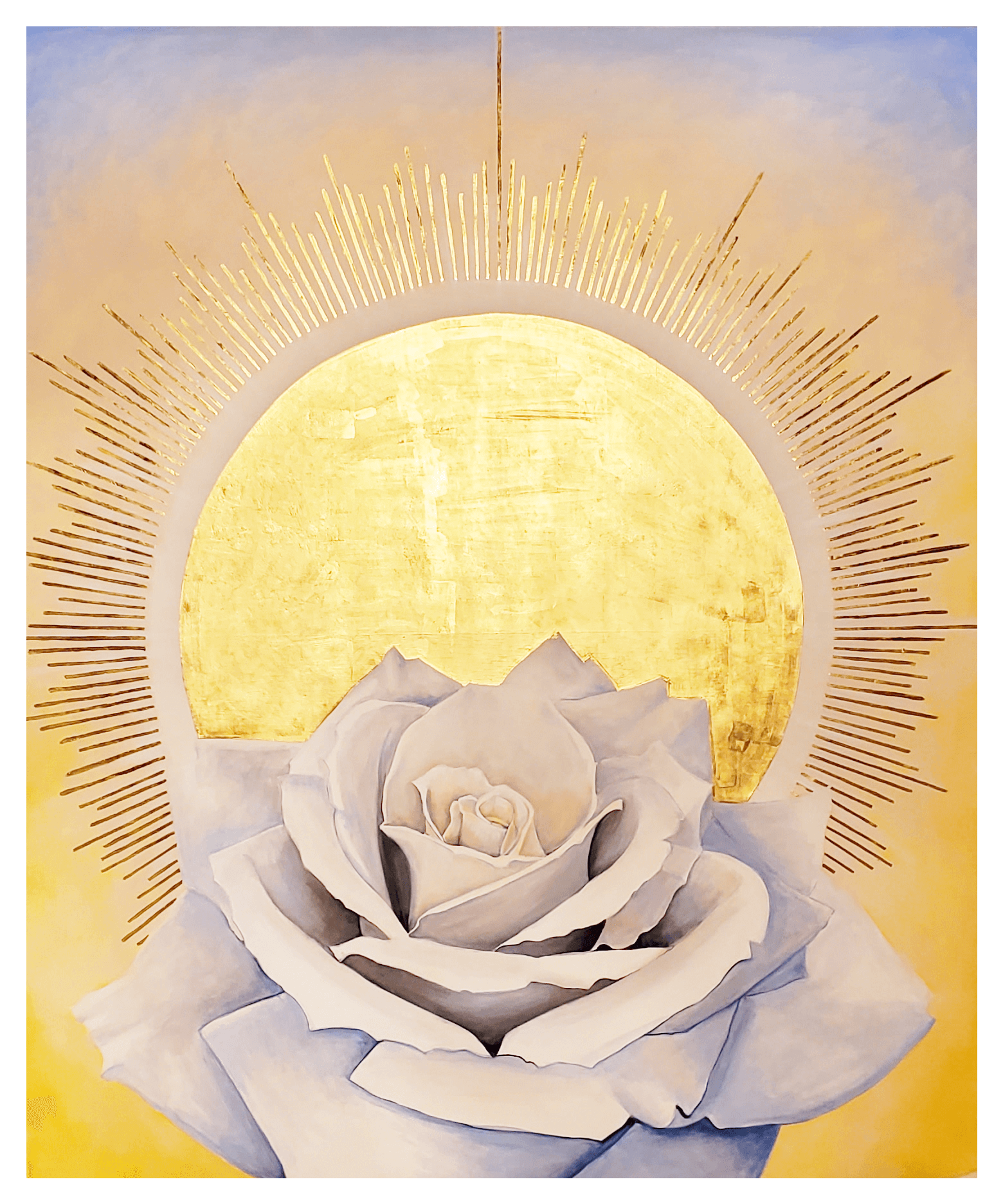
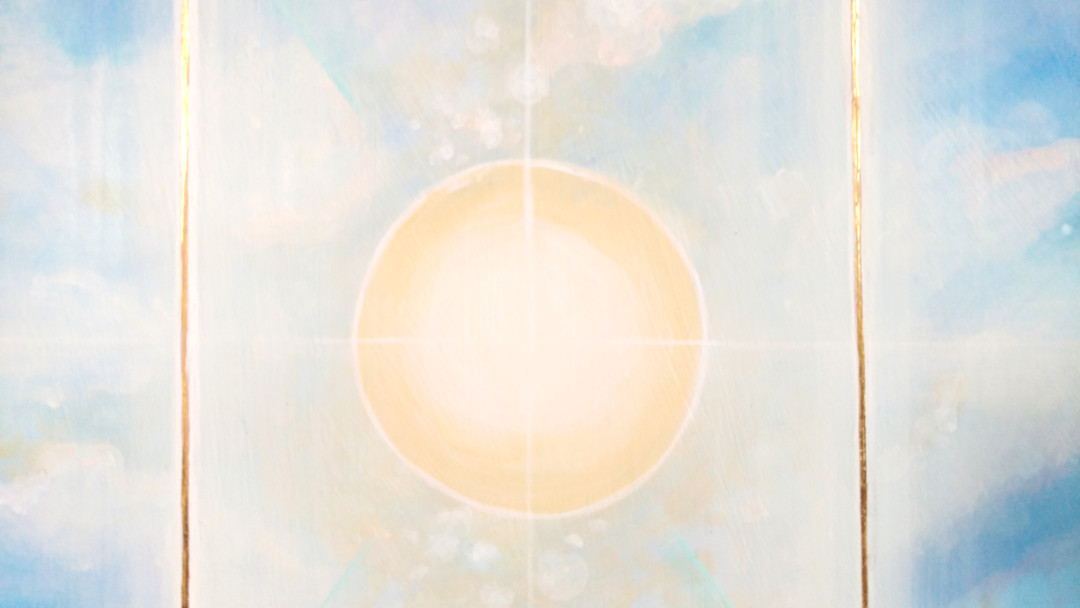
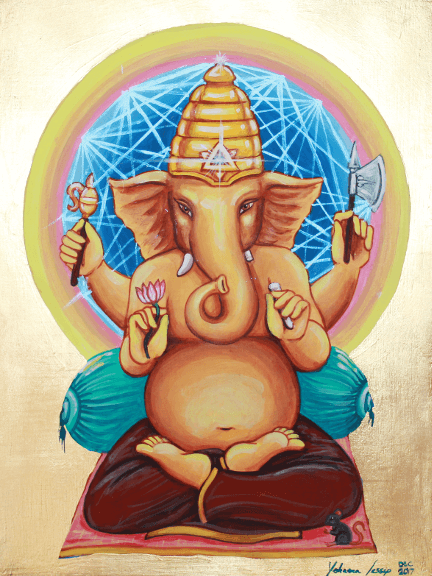
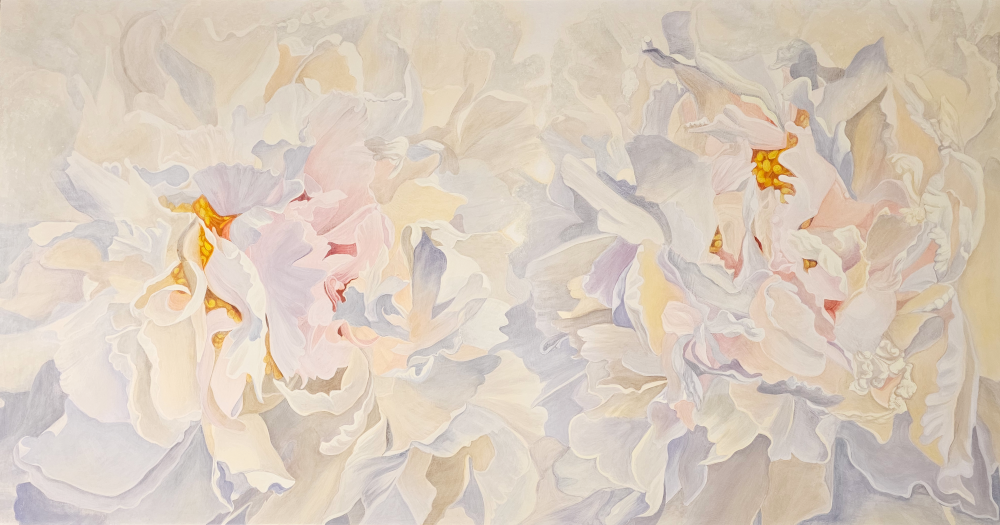 © Yohanna Jessup all rights reserved
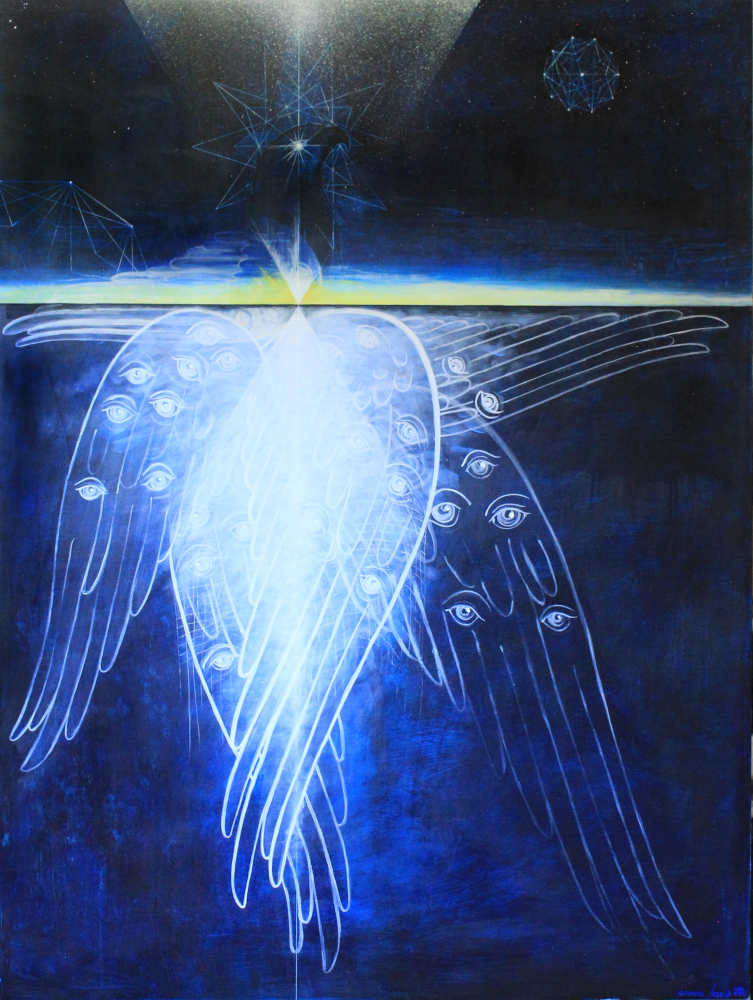 © Yohanna Jessup - all rights reservedAquila: A Painting of Threshold and Ascent