PEONIES (UNION): A PAINTING OF LONGING, PARTNERSHIP, & THE ANCIENT DESIRE TO RETURN
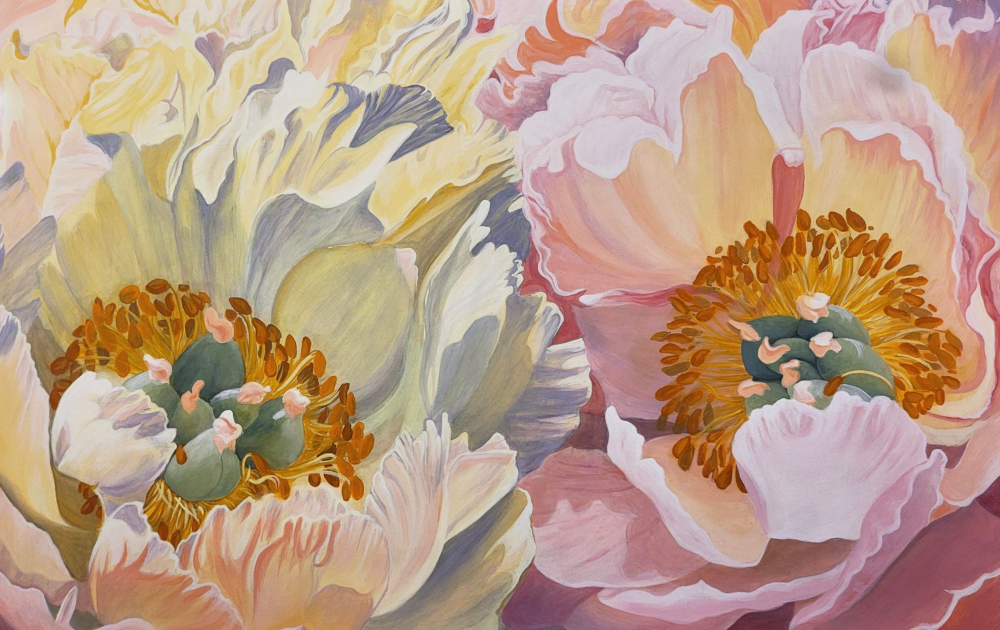
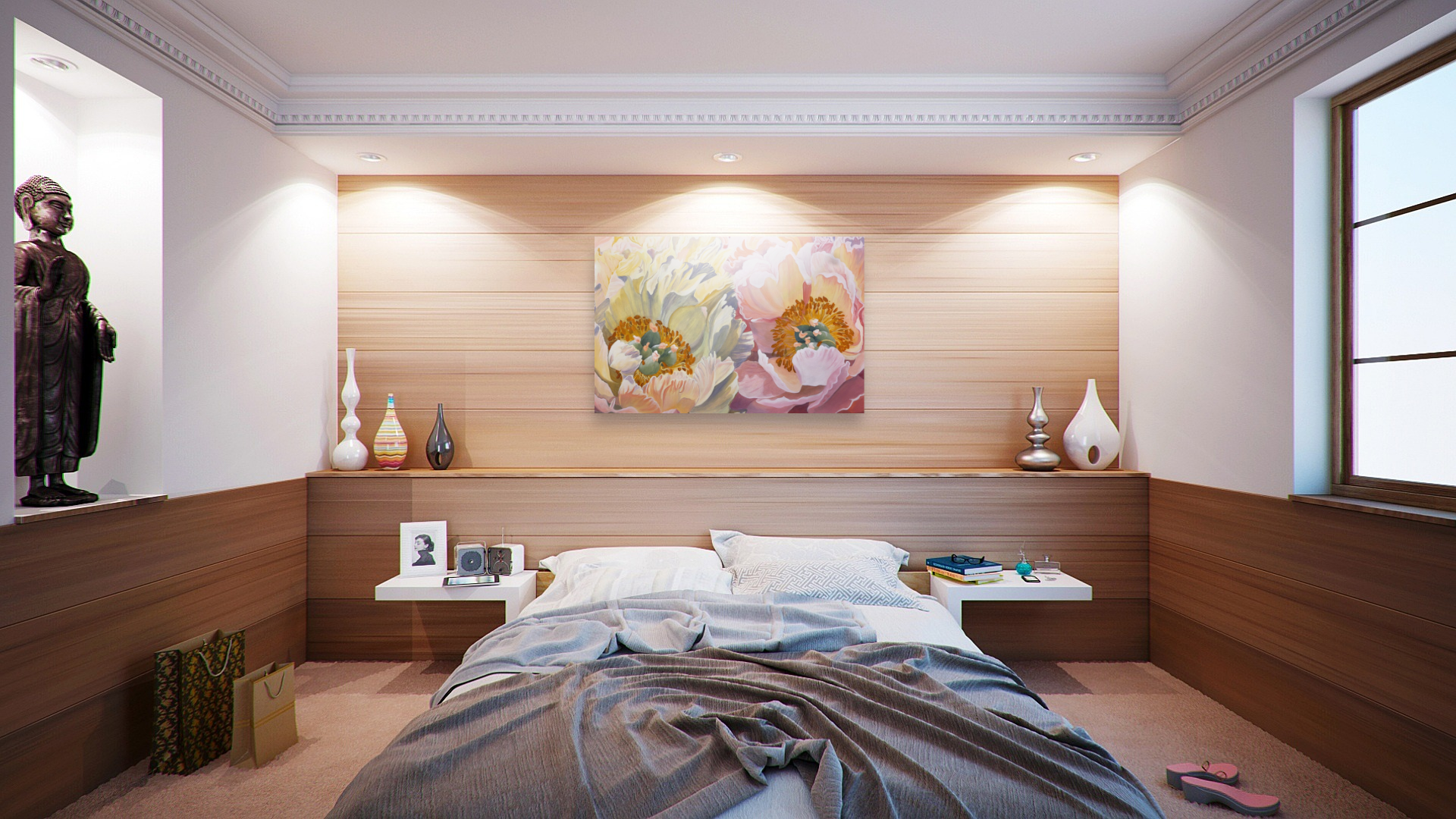
Peonies (Union)
36 × 24 × 2 inches
Water soluble wax paint on wood panel
Private Collection
A Longing Two Years in the Making
Some paintings arrive quickly. Others wait.
Ever since I completed Peonies – Life Cycles, I had wanted to paint a pair of peonies — two blooms in relationship, in conversation, in tension with each other. But the inspiration didn’t come. The idea sat quietly in the background of my studio life for nearly two years, unhurried, waiting for the right moment.
That moment arrived this spring. I had begun sketching the concept while also opening a conversation with feng shui and space clearing expert Tracey Stanton about partnership — the energy of the relationship corner of the bagua, and what art can do in that space. The two threads were moving together when I made a trip to a local peony farm. I came home with a camera full of images and something more essential: a felt sense of what the painting needed to be. The whole thing came into light.
Two Open Hearts
From the beginning, the geometry of this painting was its meaning. Like Marigolds, Peonies (Union) is built on the dyad — two centers, neither dominant, the eye moving between them in a living exchange. But where Marigolds holds its tension across a charged horizontal field, this painting is something softer. Something more intimate.
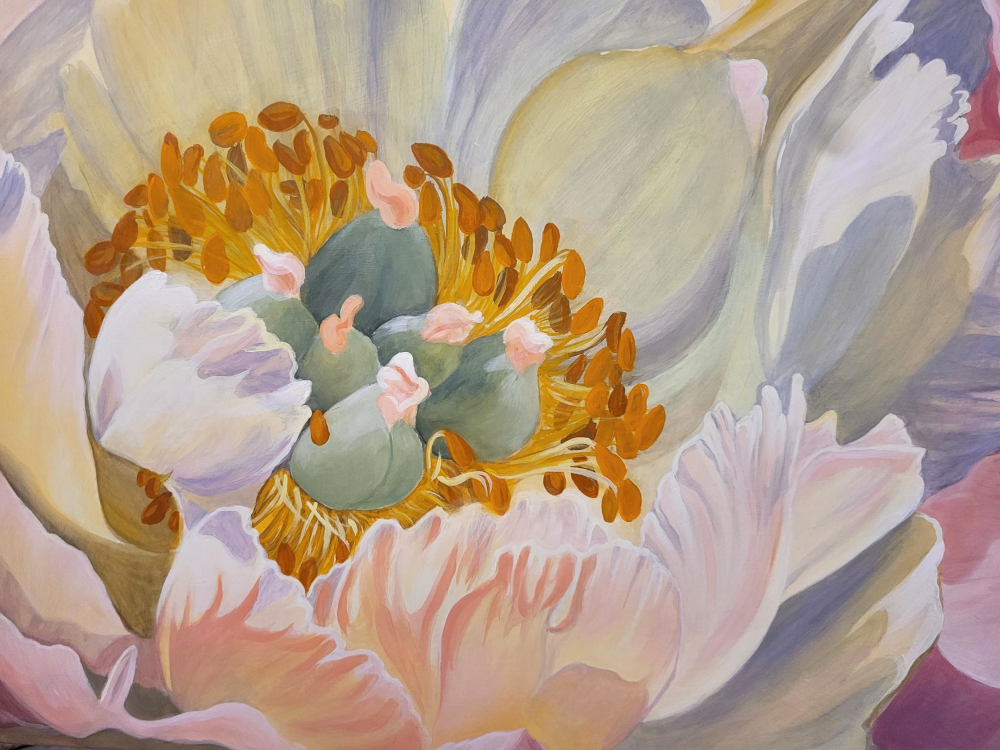
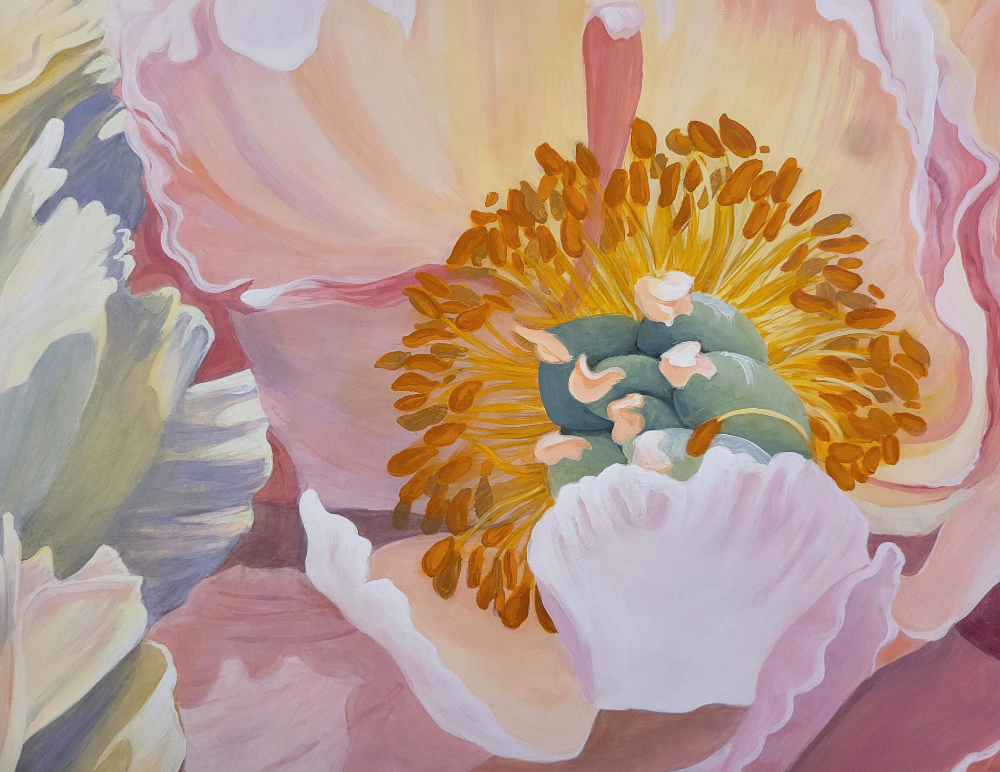
In conversation with Tracey, one element became clear: both centers needed to be fully visible and open. That was non-negotiable. In a true partnership, the heart of each person is neither hidden nor defended — it is present, available, seen. The two golden centers of these peonies face each other and tilt upward together, as if oriented toward the same light. Two open hearts. Two beings who are distinctly themselves, and yet unmistakably drawn toward something shared.
The flowers are also genuinely different from each other — one carrying warmer yellow and peach tones, the other softer pink. Complementary rather than matched. This felt important. Partnership is not sameness. It is the harmony of two distinct natures finding their common orientation.
The Ancient Longing & The Nature of Two
There is a story I love, told by Aristophanes in Plato’s Symposium, that has stayed with me for years. He describes a time when human beings were whole — round, complete, containing both natures within themselves. The gods, threatened by their power, split them in two. And ever since, each half has wandered the earth seeking the other — that ancient, aching longing to return to wholeness.
“The desire and pursuit of the whole,” Aristophanes says, “is called love.”
This myth echoes through many traditions — the separation of the primordial androgyne, the divided soul seeking reunion, the fall and the longing to return. What moves me about it is not its theology but its emotional truth. We recognize it. That particular quality of longing — not desperate, not grasping, but deep and steady — is something most of us have felt.
In sacred geometry, the Dyad — the number Two — carries this same essential nature. The Two is never simply opposition. Between any two distinct beings, something generative arises in the space they share. And the Two always carries an impulse back toward the One — longing is built into its very structure. It cannot help itself.
This painting did not use an imposed geometric framework — and that absence is part of what gives it its softness and organic warmth. Yet when I consider where the composition landed, the centers of both flowers orient naturally upward and toward each other — precisely where they would point if the Vesica Piscis, that ancient symbol of two becoming generative together, had been laid beneath them. The archetype surfaced through the hand without being asked. Which feels, somehow, exactly right for a painting about the kind of love that finds its way home without a map.
A Companion to Marigolds
This painting is, in some ways, a second verse of a song that began with Marigolds. Both works explore partnership through the geometry of the dyad — two centers in living relationship. But they tell different stories.
Marigolds is solar and electric. It speaks of the creative fire of polarity, the charged exchange of opposites meeting across a field.
Peonies (Union) is tender and aspirational. Its softness is not passivity — it is openness. The upward movement of the composition, the lightness of the upper petals almost dissolving into air, gives the painting a quality of surrender alongside the longing. Reaching without grasping. Wanting without demanding.
Together, they are two expressions of love’s great mystery: the creative spark of difference, and the heart’s ancient desire to come home.
A limited edition print will be available later this year — join the newsletter to be notified first.
 ©YohannaJessup2023