SAND CASTING BRONZE – THE COMPASS ROSE

Navigating Creativity: The Compass Rose Bronze Casting Journey

This project is the reason I began sand casting bronze! In 2022 The compass rose was initially conceived as a stone carving. But after discussing it further it seemed that a bronze compass rose resonated more with the spirit behind the project as well as being a beautiful statement piece that would hold up in an outdoor environment.
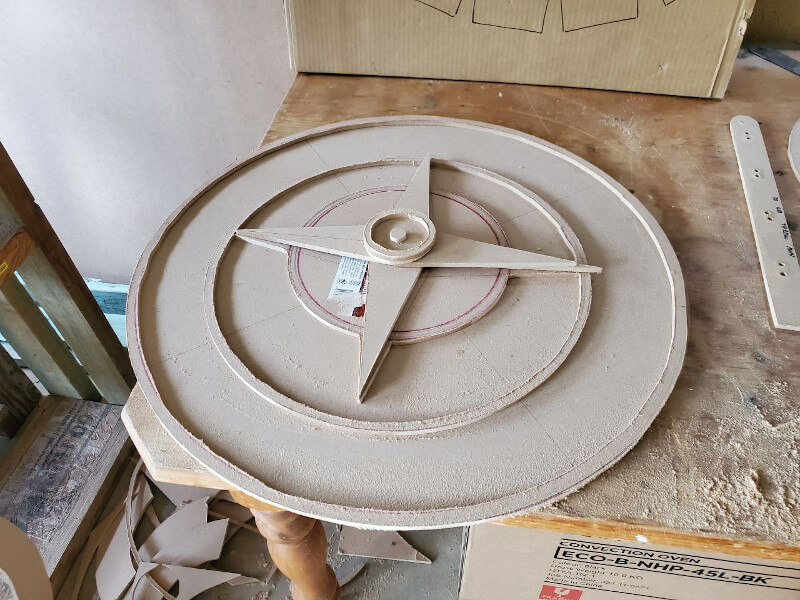
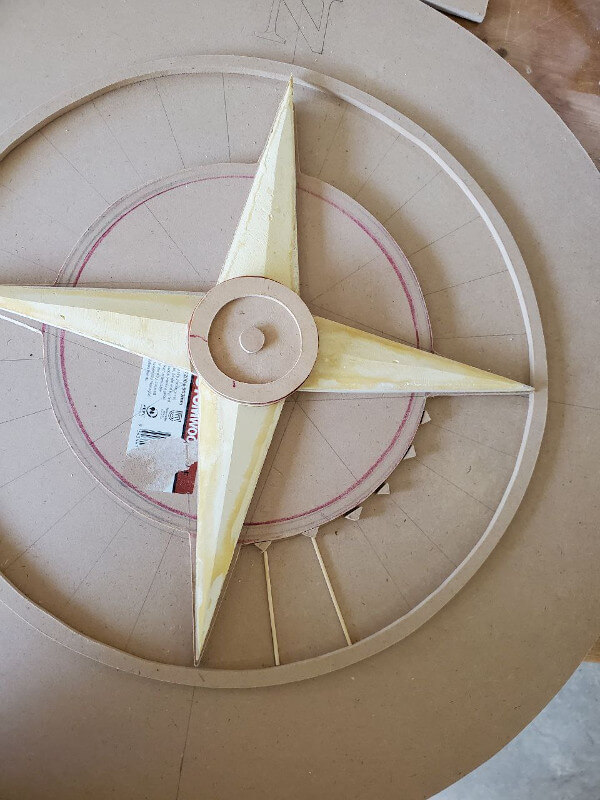
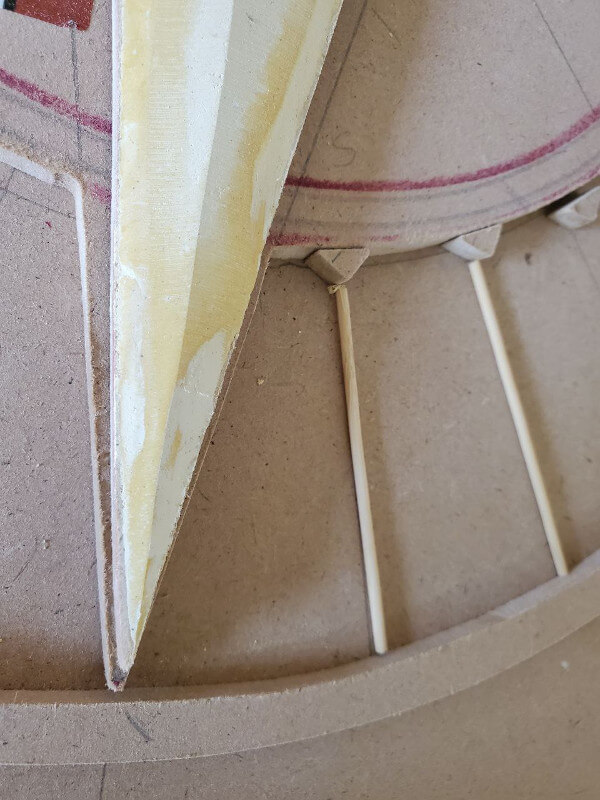
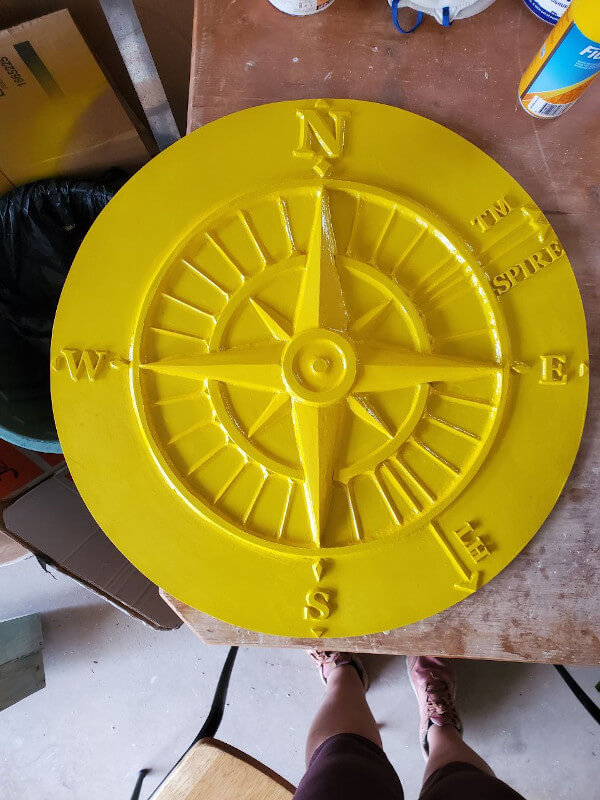
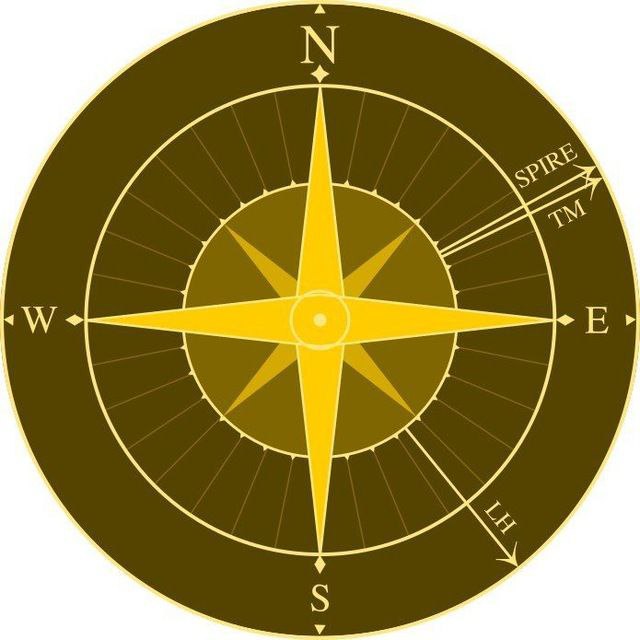
I designed the compass rose to be 60 cm / 24 inches in diameter. It has the four cardinal directions and when completed will be installed pointing true north. The 32 spokes around the middle ring indicate the design is based on the siderial compass rose which uses stars for navigation.

In November and December of 2023, the project saw significant advancements alongside its share of setbacks. Despite four well-executed pours, achieving the final casting remained elusive.
Progress and Challenges

Initially I had to make some tweaks on the foundry system to get it consistently working. We added a better forced air blower, changed the burner and propane line to get better control over the gas/air mix and temperature.

Once we had a consistently working foundry, I did a couple initial small castings. These had a lot of surface quality issues which I addressed by 1. changing my parting powder from calcium carbinate to a fine graphite powder called plumbago. The second and most important factor was the sand I was using. I bought a blender and spent a lot of time grinding enough sand to use as facing sand for the pattern. This finer sand holds finer detail on the areas of the pattern that count – which is basically the whole front of the pattern!

Pattern Making

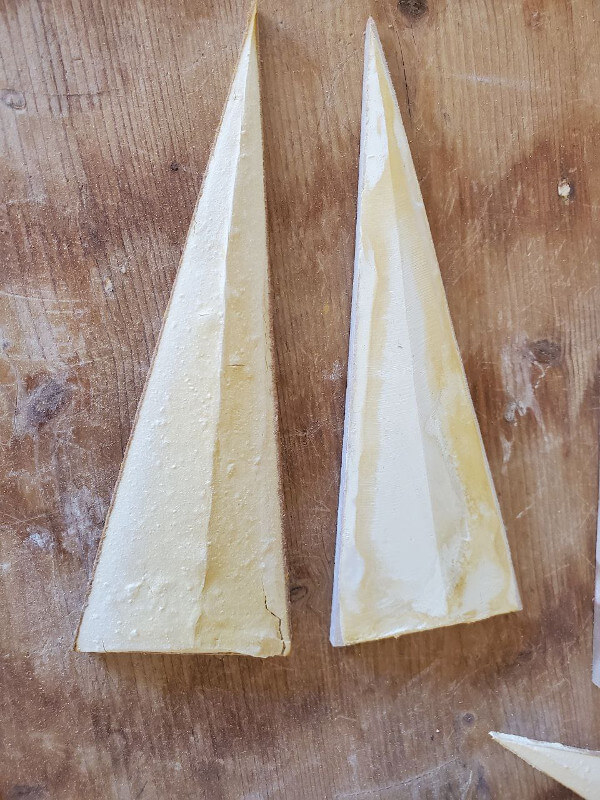
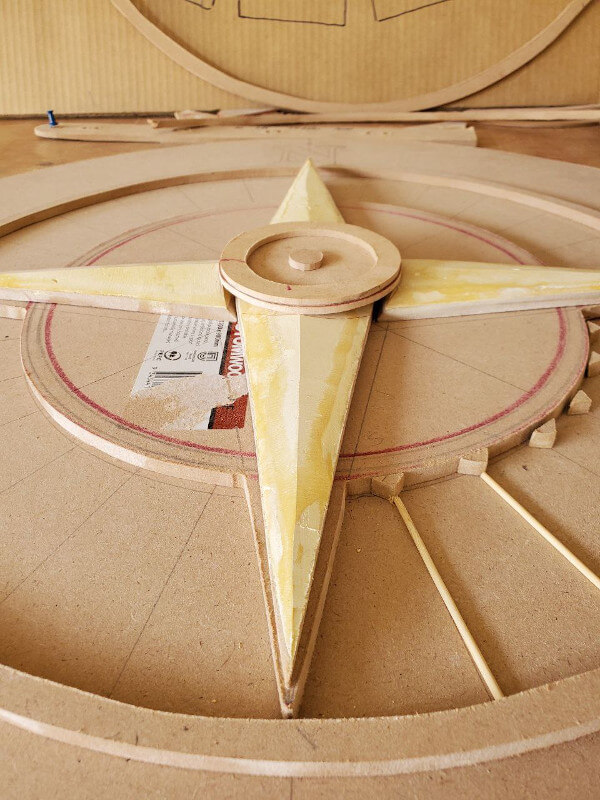
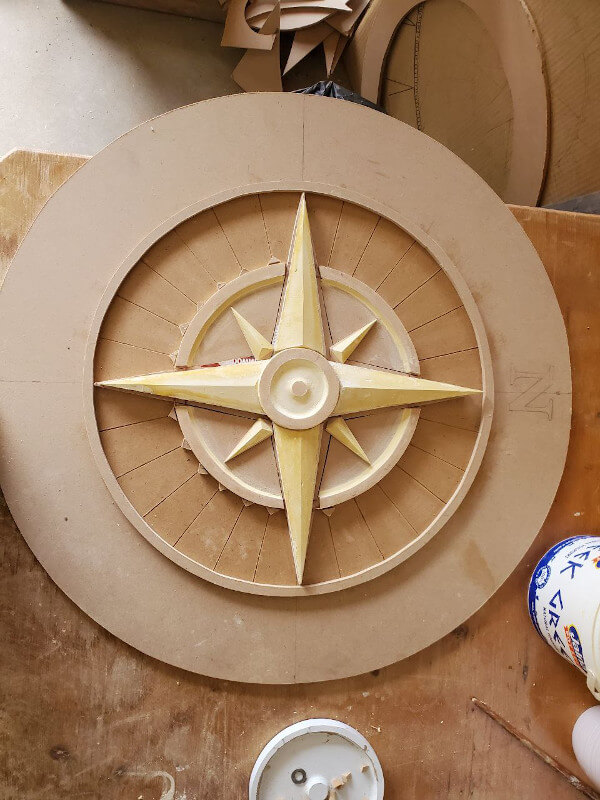
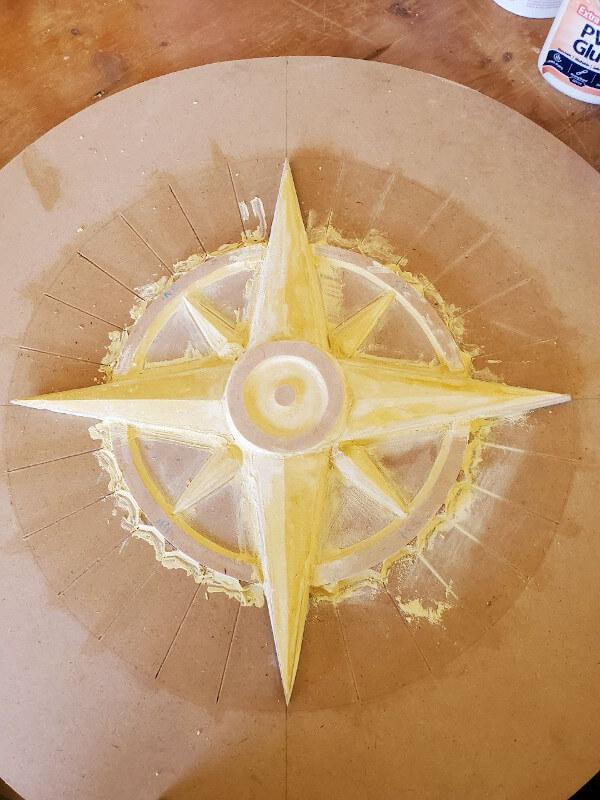
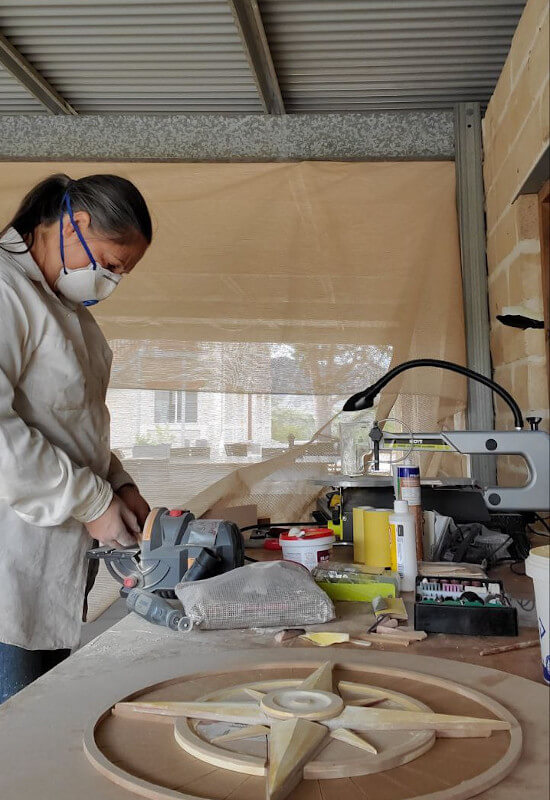
After addressing the surface quality issues as best I could, I began the pattern making. This took about a week. I used MDF of different thicknesses to cut the various parts of the design. Then I used wood putty to build up the 3d areas on the cardinal directions. I glued it all together and then gave it several coats of glossy spraypaint. The letters for the cardinal directions and the location pointers were laser cut acrylic.

First Casting

The first casting was a total fail. The metal was not hot enough. So upon contact with the sand mold it hardened and could not flow through the mold.
It was very helpful to go through the mold making process so I knew what that piece would be like. I have never cast a piece this size and so I wasn’t sure how things would work, how long it would take to pack the sand mold (about 3 hours everytime,) and wether or not the sand would simply collapse out of the cope and drag (top and bottom) of the sand mold as we were trying to move it around. The sand did collapse and so I developed a system using plywood sheets to help hold the sand in place while we move the halves of the mold.

Second Casting

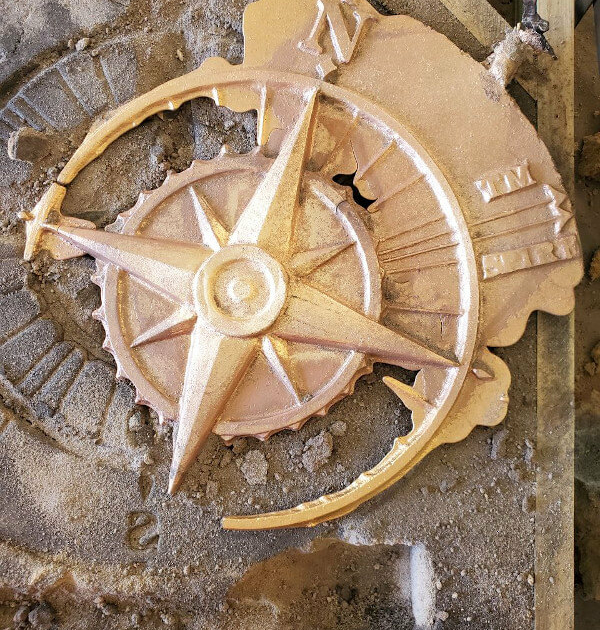
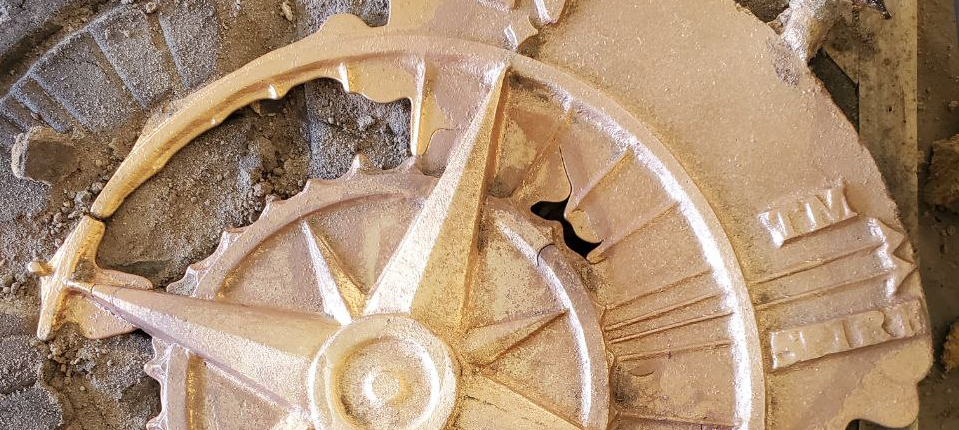
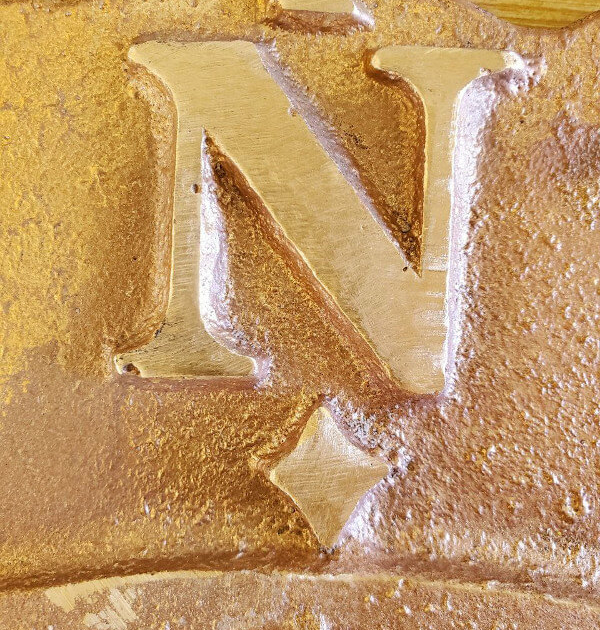
I really loved this object despite it being incomplete! It looks like some ancient relic found at the bottom of the ocean. The whole central part of the casting came out very well.

Additionally  this casting gave a good indication of surface quality I could expect using the finer facing sand.  The surface quality was by no means perfect.  But I was able to do several experiments grinding and sanding the surface. Because of the overall design and scale I was satisfied that I could grind  and sand without loosing important details.
I added more material on the back of the compass rose pattern to create space for the metal to flow to the outer edges of the piece. In hindsight I will probably remove this layer. I think the real issue here was simply not enough metal.

Third Casting

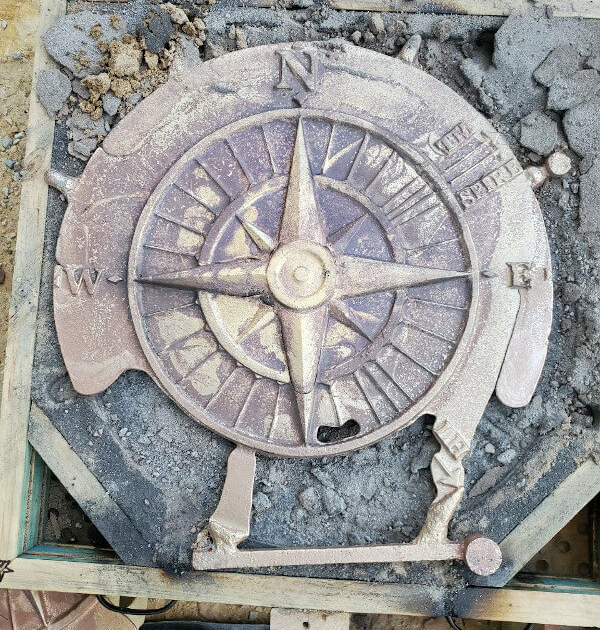
The primary issue with this casting is not enough metal.
The other big issue is that I don’t really have control over where the metal is flowing in the mold. This creates odd seams where metal that has entered the mold and flowed through parts of it begins to cool. Then another flow of metal comes into contact with that cooling edge and creates a seam. This weakens the casting.

Final Casting

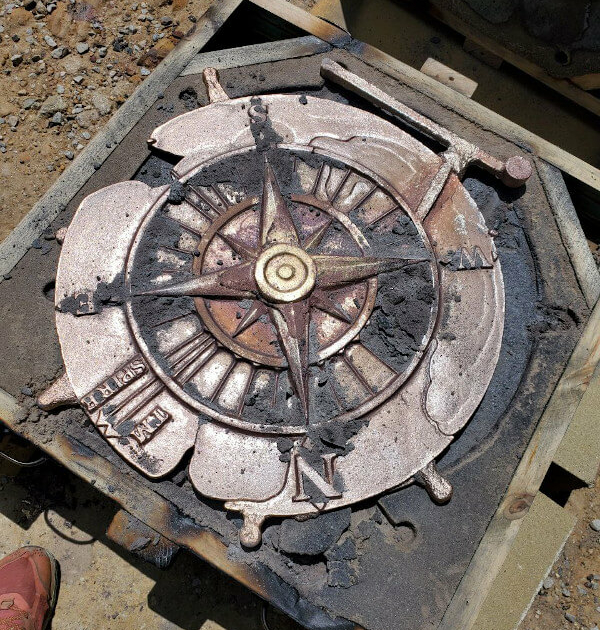
This time we filled the #30 crucible nearly to the rim. This is about 90 lbs / 40kg of bronze! It was not enough metal to fill out the compass rose or the risers that are placed around the piece. Risers are necessary because as metal cools it shrinks. The risers provide a resevoir of metal so that as areas of the casting which are cooling can draw excess metal to lessen the amount of shrinkage. I don’t feel the design of the risers I have for this casting is an effective one and it is something I will be researching further this year. The issue with seams is still very apparent in this casting as well.

Wrap Up

While the journey presented its share of obstacles, it served as a rich learning experience. Key takeaways encompassed refining foundry operations, pattern-making proficiency, and understanding metal flow dynamics. Moving forward, focus areas include enhancing gating systems, optimizing riser design, and refining surface quality and finishing techniques.

Acknowledging the iterative nature of artistic endeavors, the Compass Rose casting project stands as a testament to perseverance and continual growth on the path to realizing creative vision.

© Copyright Yohanna Jessup 2017