
CULTIVATING A SPARK OF INSPIRATION
As winter deepens and the days grow shorter, I find myself reflecting on the earliest moments of inspiration—those first flickers of knowing that precede form.
This is the season of inwardness. A time when, there is a natural internalization. An opportunity to return to the source.
For me, the journey of creating art doesn’t begin with an thought. Thoughts, especially those generated by my ordinary mind, often feel flimsy, and insubstantial. I’ve had countless notions about what to paint that never made it to the canvas. They simply didn’t carry the life I’ve come to recognize in what for me has come to be true inspiration.
Instead, I turn inside.
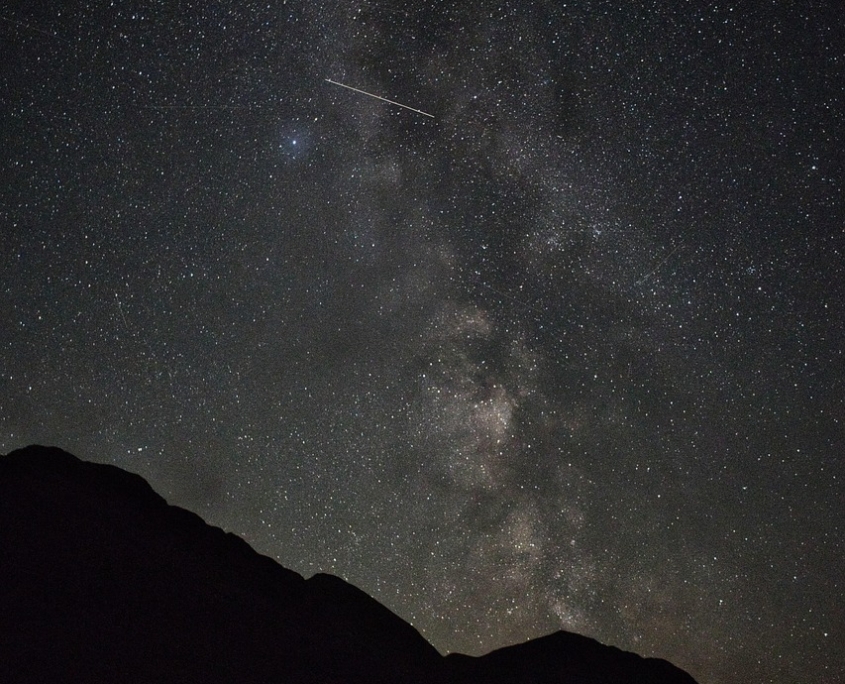
THE DIFFERENCE BETWEEN A THOUGHT AND A SPARK
In my creative practice inspiration that becomes art always begins with an experience. It might be a shift in consciousness, a felt sense of awakening, or an a-ha moment that opens something inside me. These experiences touch deeper layers of self—beyond the everyday level of mind—and arrive with a kind of zing that’s unmistakable.
That zing, for me, is the spark.
Through my meditation training, I’ve learned how to return to the internal space where the inspiration occurred. This return is key—it allows the vision to unfold in its own time, without rushing or reducing it.
VISION, SYMBOL, AND THE DIFFICULTY OF TRANSLATION
Sometimes, the spark of inspiration includes a visual component—a non-physical vision that feels holographic, multidimensional, and deeply alive. These inner visions can be stunning, but incredibly difficult to capture in 2D. Mountains in the Sky, a painting I started but never finished, was one such attempt. The image I saw while meditating—a floating range of crystalline mountains—defied translation.
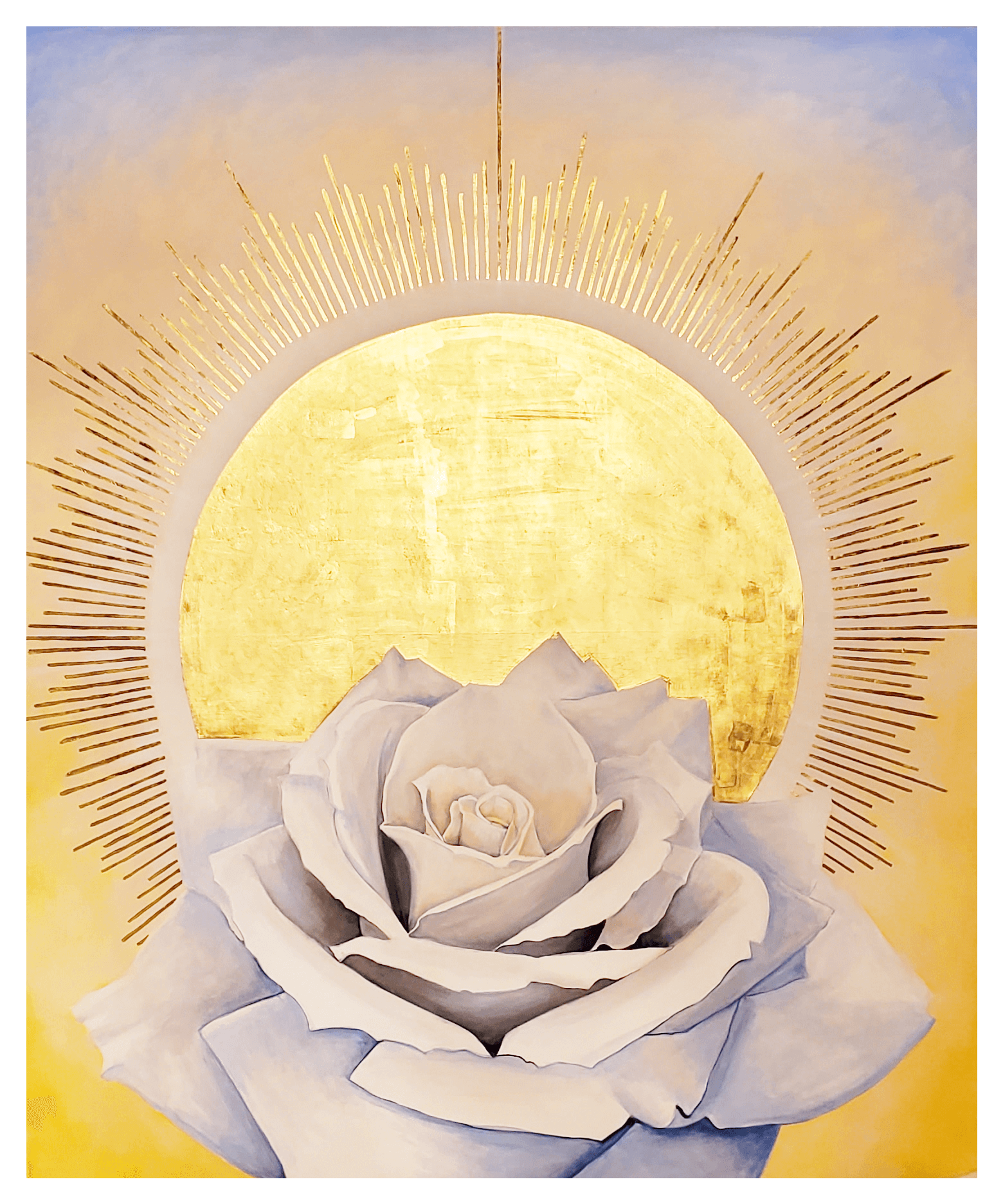
On the other hand, White Rose was a successful recreation of an inner vision. It carried the clarity and depth that let it fully come through. But even when the inspiration isn’t visual, the experience itself becomes a felt-sense guide—a compass pointing toward what wants to emerge.
HOLDING THE SPARK
After a spark of inspiration lands, I don’t immediately act on it. Instead, I hold it quietly in my awareness—nurturing it like an ember. Sometimes I make a quick sketch during a retreat or after meditation, just enough to capture the essential structure. But I’ve learned that speaking about an inspiration too early can disperse its energy.
So I protect the spark.
In my daily meditations, I return to the feeling of it. I let it live in the background. There’s a quiet joy in this phase—a kind of sacred anticipation that builds as the inspiration begins to kindle.
THE FIRE METAPHOR
This part of the process reminds me of lighting a campfire.
You need the right materials that can actually catch a spark—some ideas simply don’t. Then you blow gently, protect the flame, and slowly feed it with twigs. You don’t rush it. If you smother it, the flame dies.
But if you tend it, the fire builds momentum.
Inspiration is like that. You have to care for it—listen, observe, feed it the right elements—until it becomes strong enough to burn on its own.
FROM SPARK TO VISUAL LANGUAGE
Eventually, I begin to see how the inspiration might take form—what symbols, colors, shapes, or materials can best express the essence I’ve been holding. Sometimes this includes research. If the inspiration is botanical, like a rose, I’ll study the plant’s structure, growth patterns, and geometric symmetries. I might explore the symbolism of five-fold geometry or the golden spiral embedded in nature.
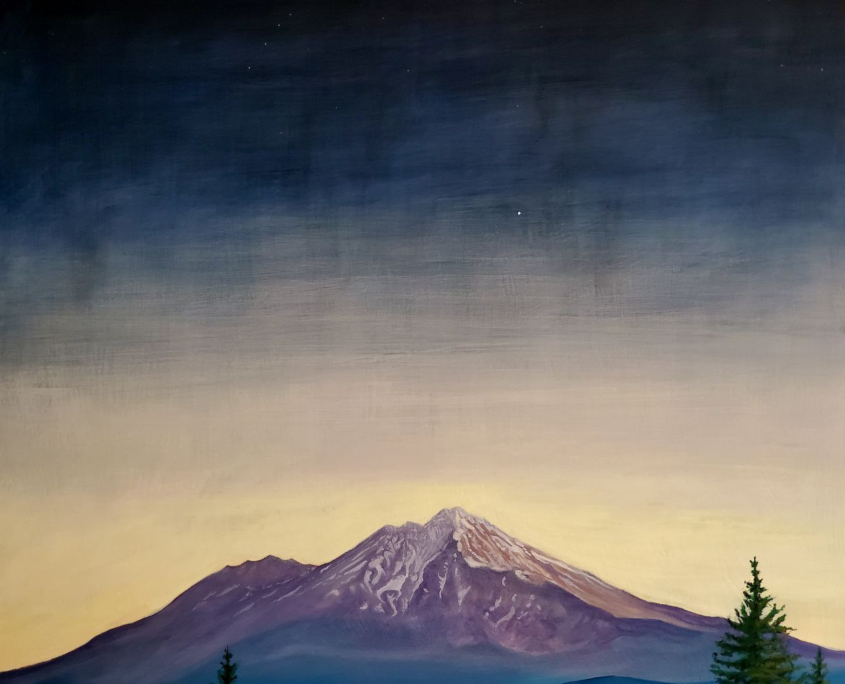
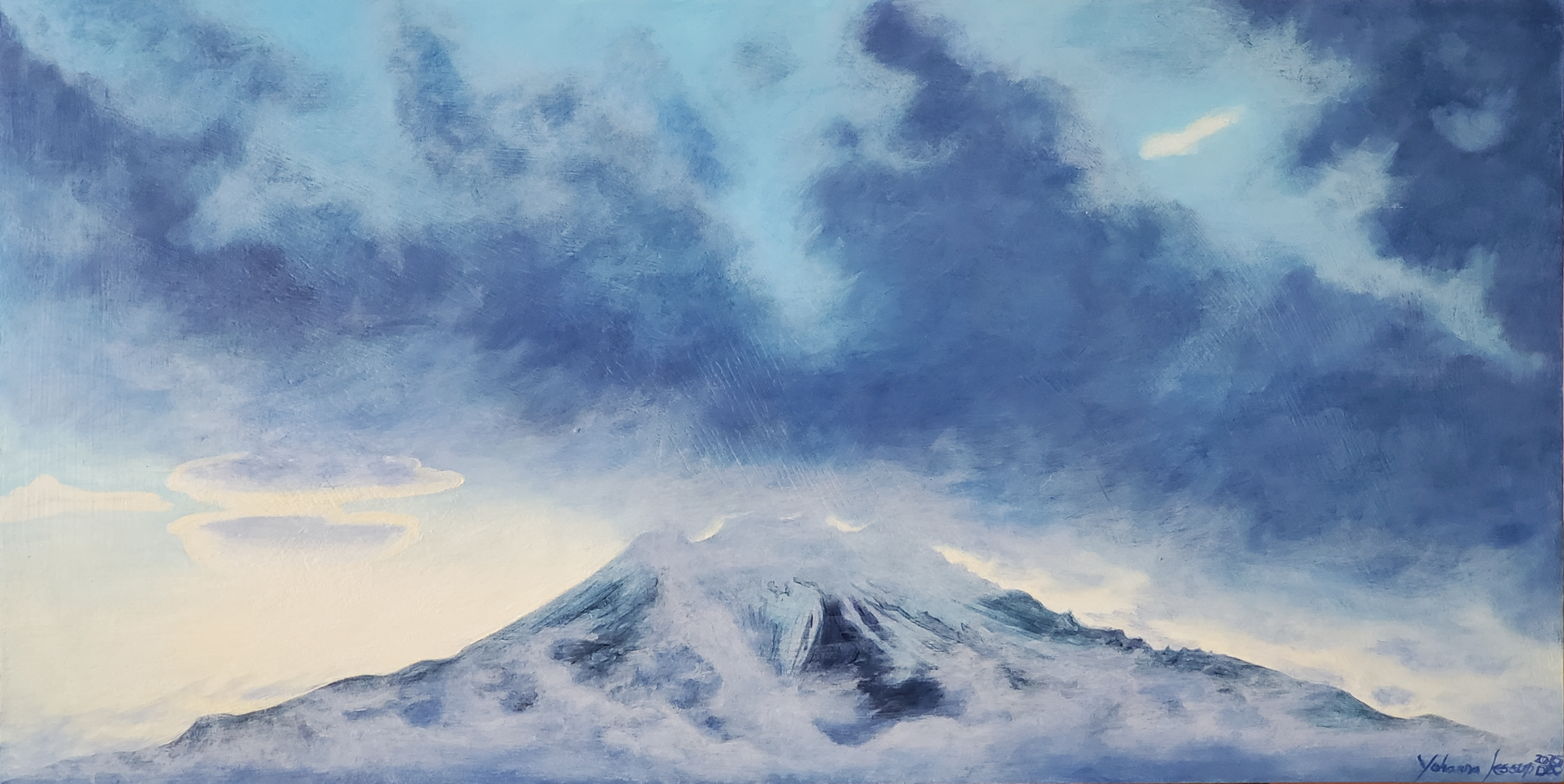
With landscape-based works like the Faces of the Mountain series, I’ve studied the geology, names, and lore of specific formations on Mt. Shasta. The knowledge I gain about the subject informs and deepens the dimension of the piece.
BUILDING A RELATIONSHIP
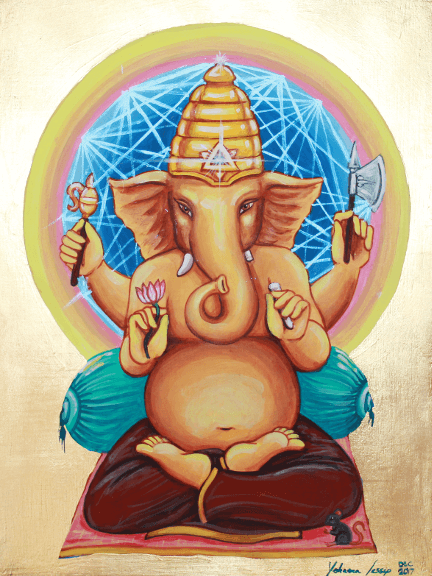
From inception to completion, I’m building a relationship with the state of consciousness that gave rise to the inspiration. That’s really what the artwork becomes—a handle for returning to that place. A touchstone for remembrance.
Before each painting session, I light a candle on my creative altar and take a moment to tune into the source of the vision. At the end of the session, I blow out the candle in thanks. I often carry the inspiration into other parts of my day—walks, baths, quiet moments where I can feel it more deeply.
Even when I’m not actively painting, the spark is still there.
THE SOLSTICE & INNER FIRE
The Winter Solstice is a powerful metaphor for the creative path.
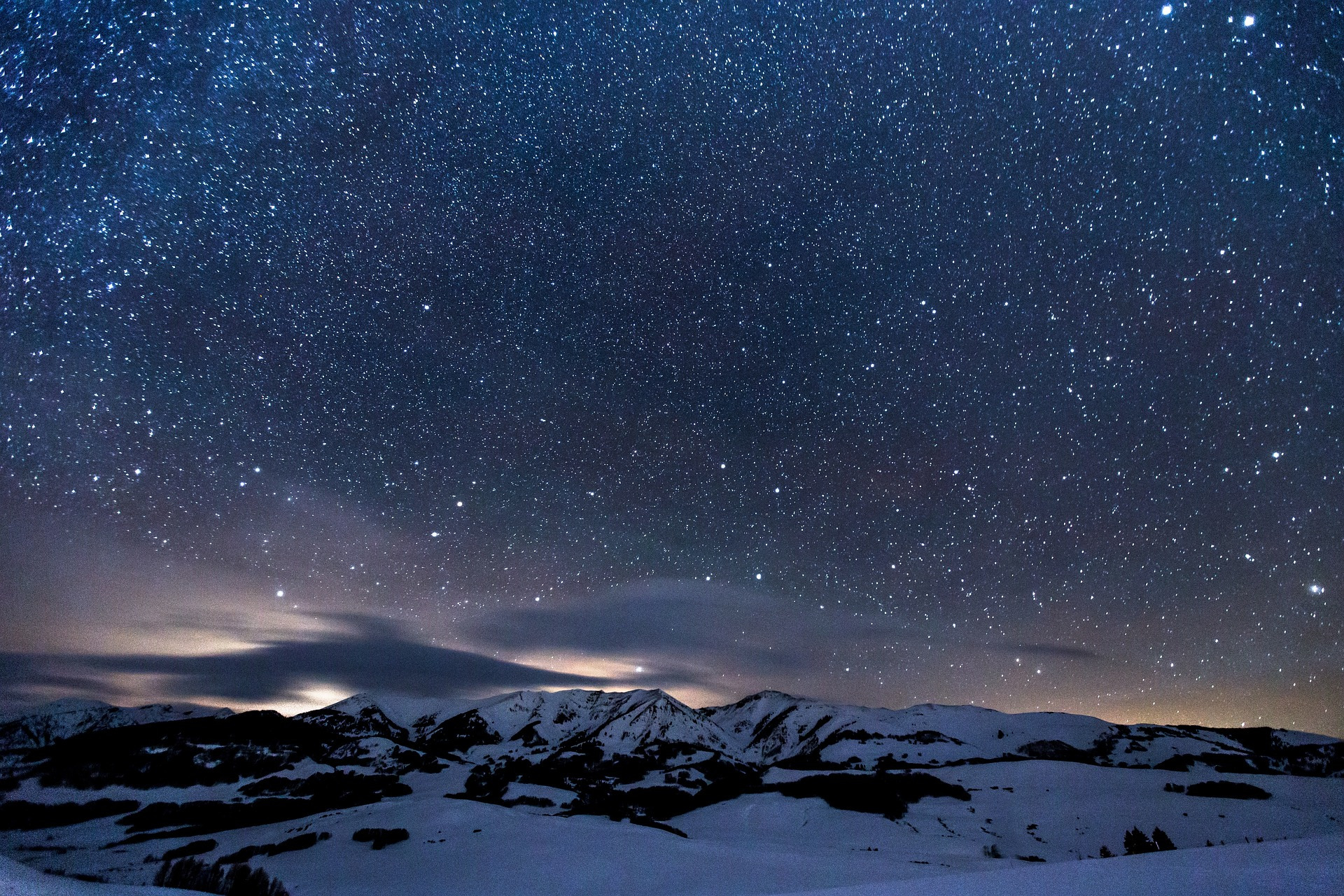
Just as the sun seems to pause before beginning its ascent, I find that my inspiration often emerges from the depths of stillness. And just as the light returns—slowly, then steadily— through nurturing my own clarity begins to grow.
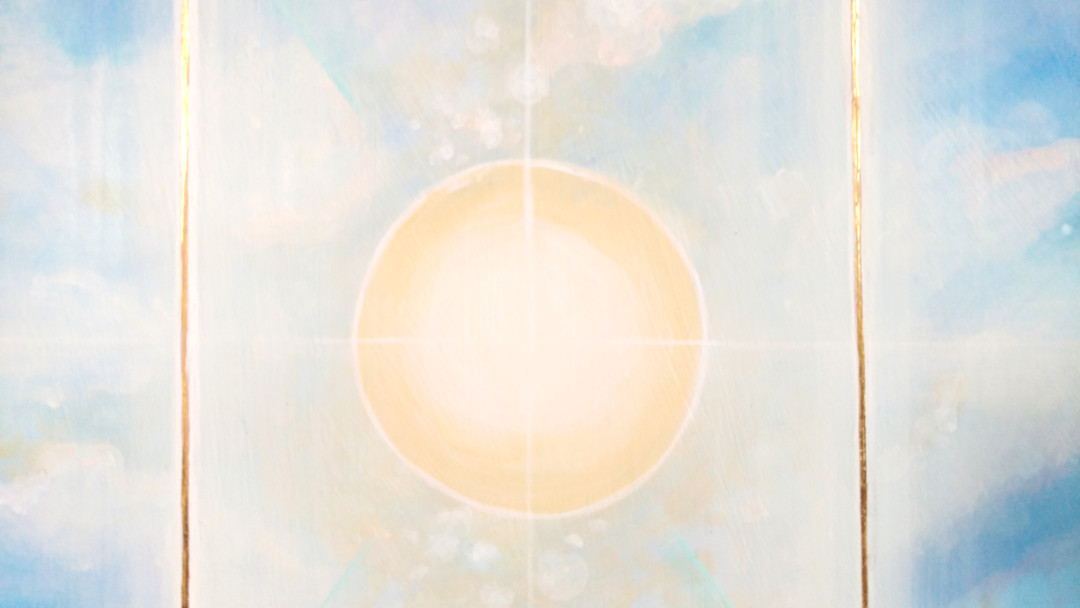
Each painting I create is, in a way, a vessel of that returning light. A symbol of the inner fire that was kindled in silence and nurtured into form.
To create is to remember that the light always present.
Even after the longest night.
“In your light I learn how to love. In your beauty, how to make poems. You dance inside my chest where no-one sees you, but sometimes I do, and that sight becomes this art.”
~ Rumi
 ©YohannaJessup2025